
If the term “managed IT services” feels confusing, you are not alone. Many business leaders have heard it come up in meetings, vendor pitches, and strategy sessions, yet remain unclear on what it truly means and why it matters. In this article, we will define managed IT services, explain their core benefits, break down cost implications, and provide practical advice for choosing the right provider. By the end, you’ll understand not only what managed IT services are, but why so many companies rely on them to stay productive, secure, and competitive.
What Are Managed IT Services?
At its core, managed IT services refer to a business arrangement in which an organization outsources its technology needs to an external company called a Managed Services Provider (MSP). Unlike hiring an internal IT staff member or reacting to problems as they occur, managed IT services involve an ongoing partnership where the MSP monitors, manages, and supports a company’s technology environment proactively and continuously.
These services can include infrastructure management, network monitoring, end-user support, cybersecurity, data backup and recovery, cloud services, and much more. The MSP becomes an extension of your team, responsible for keeping your systems up, secure, and operating at peak performance. Learn more about our Managed IT Services.
Outsourcing your IT doesn’t mean losing control. A quality managed IT provider works with your leadership to understand your goals, tailor support to your needs, and maintain transparency and communication. This collaborative relationship allows your internal staff to focus on business priorities while the MSP handles routine IT management and complex technical challenges on your behalf.
Why Managed IT Services Matter for Businesses Today
Technology has become central to every business function, from sales and marketing to operations and customer support. With this reliance comes increased complexity, higher security risks, and a constant need to stay current with new tools and trends. Managed IT services help businesses navigate this complexity with confidence.
Proactive Monitoring and Maintenance
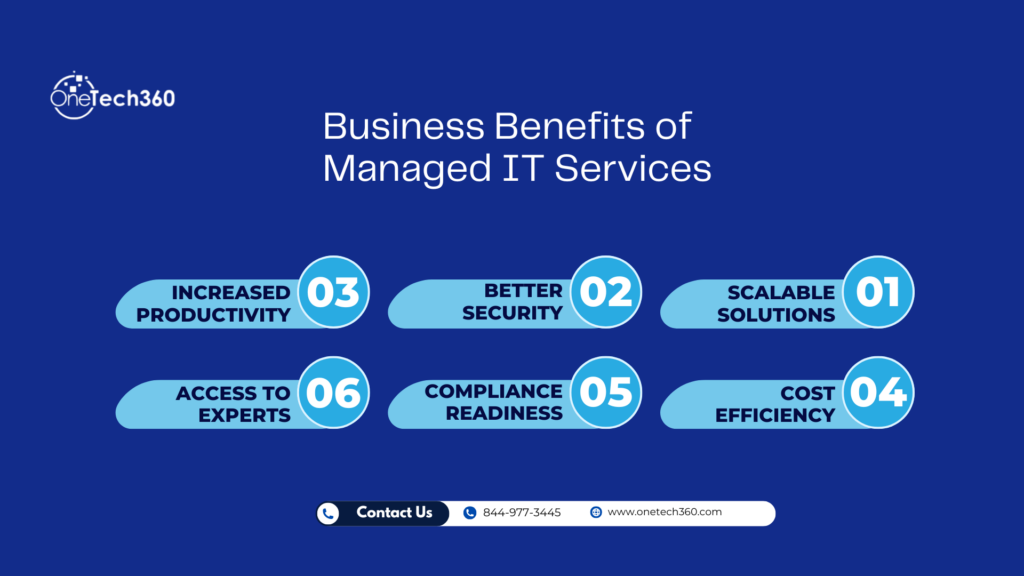
One of the biggest advantages of managed IT services is proactive monitoring. Instead of waiting for systems to fail, MSPs use automated tools and experienced engineers to detect and resolve issues before they disrupt your operations. This reduces downtime, increases productivity, and minimizes interruptions that can slow growth.
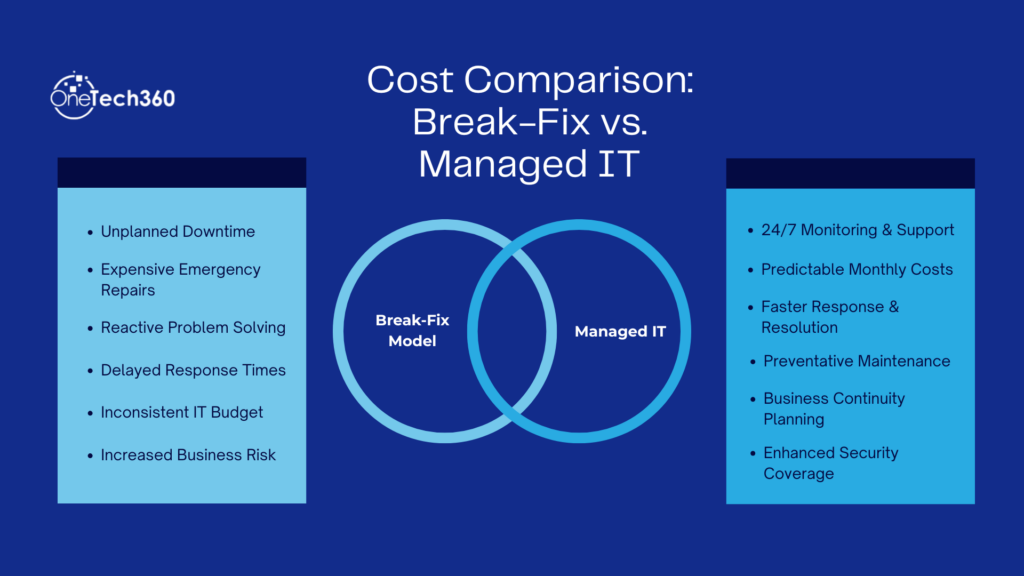
This approach stands in contrast to the traditional break-fix model, where IT support is only called when something breaks. That reactive model can cause delays, unpredictable costs, and extended outages. You can read more about that comparison in this breakdown of Break Fix vs. Managed Services.
Access to Specialized Expertise
Smaller companies may find it difficult or expensive to hire in-house experts in every technology domain, such as cybersecurity, cloud architecture, or network engineering. Managed IT services provide access to a team of specialists with diverse certifications and real-world experience. This breadth of expertise ensures your technology strategy stays aligned with best practices and emerging risks.
Scalability and Flexibility
As your business grows, your technology needs change. Managed IT services are designed to scale with your business. Whether you’re onboarding new employees, expanding into new markets, or adopting cloud platforms, your MSP can adjust service levels and resources to support your evolving requirements. This flexibility keeps IT costs aligned with value delivered, rather than ballooning unpredictably as needs grow.
Enhanced Cybersecurity and Compliance
Cyber threats are on the rise, and the consequences of a breach can be devastating. Managed IT providers offer advanced security measures including continuous threat monitoring, multi-layered defenses, security training, and incident response planning. These capabilities help protect your business from malware, phishing attacks, ransomware, and data loss.
Many industries require strict compliance with security regulations. A managed IT provider can help you implement and maintain controls necessary for standards such as HIPAA, PCI DSS, or GDPR, reducing risk and audit stress on your business.
How Managed IT Services Save Your Business Money
Many decision makers ask how managed IT services contribute to cost savings. The answer lies in predictable budgeting, productivity gains, and risk reduction.
Predictable IT Spending
Most managed IT service agreements operate on a subscription basis, typically a monthly flat fee. This model makes IT budgeting more predictable and manageable compared to break-fix arrangements where costs vary greatly depending on incidents and emergency fixes. Knowing your IT expenses each month helps companies plan more effectively and avoid surprise costs. Check out our 2025 Pricing Guide.
Reduced Downtime and Higher Productivity
Downtime is expensive. When systems go offline, employees can’t complete work, customers get frustrated, and revenue can be lost. By proactively managing your systems, MSPs reduce downtime and ensure your teams stay productive. The time your staff spends troubleshooting technology issues is time they could be using to drive revenue or improve customer service.
Lower Staffing Costs
Maintaining an experienced internal IT team can be costly, especially as technology needs become more complex. Managed IT services allow businesses to get enterprise-level support without full-time salaries, benefits, training costs, and turnover risks. This can be a significant advantage for small and mid-sized companies that need expertise but cannot afford a full internal team.
Avoiding High-Cost Disasters
Security breaches, data loss, and compliance failures can turn into catastrophic expenses. MSPs help prevent these risks with strong security practices and disaster recovery plans. Avoiding even one major outage or breach can justify the cost of managed IT services many times over.
What Managed IT Services Typically Include
Managed IT services can be customized, but most providers include core offerings such as:
- 24/7 remote monitoring and management
- Network infrastructure support
- Cybersecurity solutions
- Cloud service management and migration
- Helpdesk support for end users
- Backup and disaster recovery
- Software updates and patch management
- IT planning and consulting
How to Choose the Right Managed IT Services Provider
Selecting a managed IT provider is a strategic decision. Here are key factors to consider:
Industry Experience
Choose a provider with experience supporting businesses like yours. Different industries have unique compliance and operational needs, and an MSP with relevant expertise will be better positioned to advise and support you effectively.
Reputation and References
Ask for client references, case studies, or testimonials. Real-world feedback provides insight into how the provider performs in practice, including responsiveness, communication quality, and reliability.
Service Offerings and Flexibility
A quality MSP should offer a range of services and be willing to tailor solutions based on your specific business needs. Avoid one-size-fits-all packages if they do not align with your long-term goals.
Security and Compliance Capabilities
Strong security competencies should be a baseline expectation. Ask potential providers about their security frameworks, monitoring tools, incident response procedures, and disaster recovery plans.
Communication and Support Model
Good communication is essential. Your MSP should offer transparent reporting, clear service level agreements (SLAs), and easy access to support when your team needs it. A provider that explains technical concepts in business terms will help you make better decisions and understand your environment.
Frequently Asked Questions
What types of businesses benefit from managed IT services?
Businesses of all sizes and industries benefit from managed IT services. Whether you’re a small startup or a growing enterprise, MSPs tailor support to your needs and industry requirements.
Will outsourcing IT mean losing control of my systems?
No. A strong MSP works with you collaboratively. You remain in charge of strategic decisions while the provider handles implementation, monitoring, and support.
What’s the difference between managed IT and co-managed IT?
In a co-managed IT model, your internal team works alongside an MSP to share responsibilities. This hybrid approach provides extra expertise where needed while maintaining internal oversight. Learn more about Co-Managed IT Services.
Further Reading and Resources
- Why Managed IT Services Are Better for Business Growth
- Managed IT Services Cost & Pricing Guide
- 2025 Managed IT Services Pricing Guide
Also explore helpful content from trusted sources like the Cybersecurity & Infrastructure Security Agency (CISA) or TechRepublic for broader IT trends and cybersecurity strategies.
Conclusion
Managed IT services are about more than just technical support. They represent a proactive, strategic partnership that helps businesses reduce risk, control costs, increase productivity, and strengthen cybersecurity. Whether you are considering outsourcing IT for the first time or evaluating a transition from reactive to proactive support, understanding what managed services offer is a critical step toward making technology an asset rather than a burden.
With the right provider by your side, your business gains not only reliable IT support but also the guidance to use technology as a competitive advantage.