
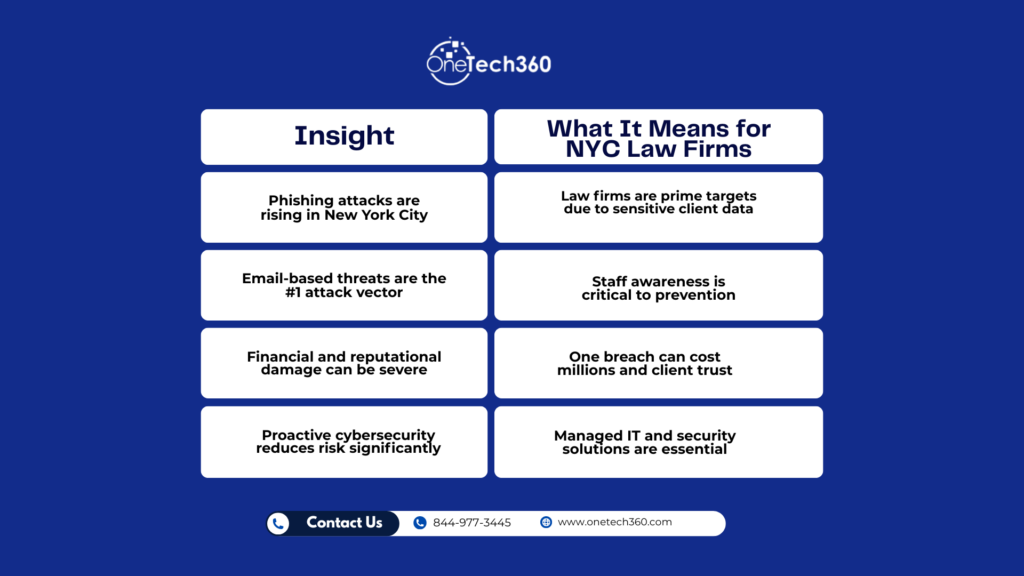
Phishing attacks in New York City are becoming more sophisticated—and law firms are firmly in the crosshairs. With access to confidential client data, financial records, and high-value transactions, legal practices across New York City present an attractive target for cybercriminals.
The problem? Many firms still rely on outdated security practices, making them vulnerable to email-based scams that look convincingly real. A single click on a malicious link can compromise your entire network, putting your clients, reputation, and bottom line at risk.
More articles you might like:
- Managed IT services for law firms
- New York City IT support solutions
- Why Law Firms Are Targets for Cyberattacks
Why How Phishing Attacks in New York City Are Targeting Law Firms This Matters
Law firms in New York City operate in a high-stakes environment where trust and confidentiality are everything. Phishing attacks do not just disrupt operations—they threaten the core of your business.
- Legal data is highly sensitive and valuable to cybercriminals
- Attorneys frequently handle wire transfers and financial transactions
- Deadlines and urgency make staff more likely to click without verifying
In a fast-paced New York City legal environment, attackers exploit pressure and human error to gain access.
Understanding How Phishing Attacks in New York City are Targeting Law Firms
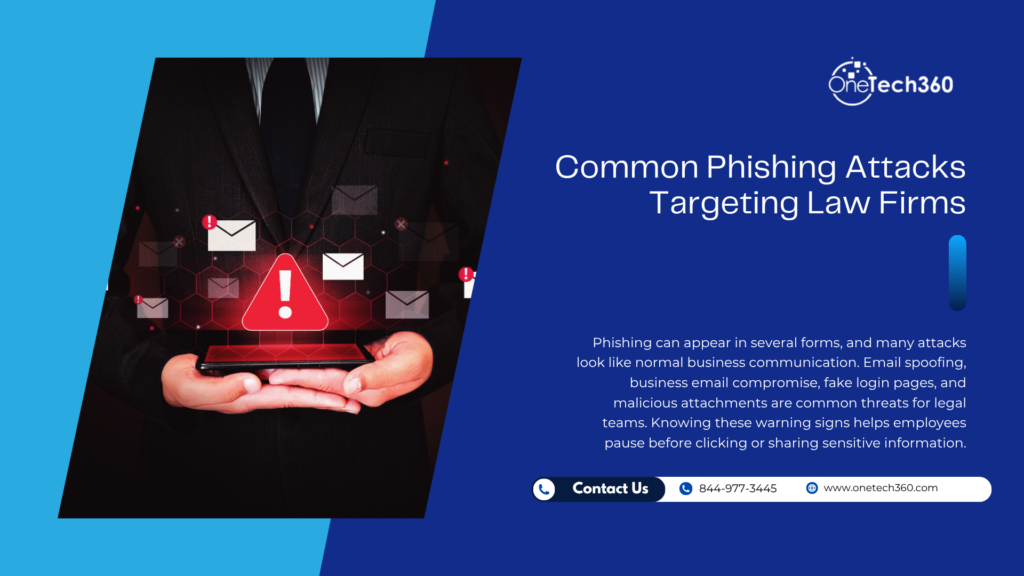
Phishing attacks are deceptive attempts to steal sensitive information by impersonating trusted sources. For law firms in New York City, these attacks typically come in several forms:
1. Email Spoofing
Attackers pose as clients, partners, or vendors to trick staff into sharing credentials or sending funds.
2. Business Email Compromise
Hackers infiltrate email accounts and send fraudulent requests, often involving wire transfers.
3. Credential Harvesting
Fake login pages capture usernames and passwords, giving attackers access to internal systems.
4. Malware Delivery
Malicious attachments disguised as legal documents infect systems when opened.
Real-World Impact
Phishing attacks in New York City law firms can lead to devastating consequences:
- Financial Loss: Unauthorized wire transfers or ransomware payments
- Data Breaches: Exposure of confidential client information
- Reputation Damage: Loss of client trust and credibility
- Regulatory Penalties: Non-compliance with data protection laws
In a competitive New York City legal market, even one incident can have long-term consequences.
Solutions and Best Practices
Preventing phishing attacks requires a layered approach. Law firms in New York City should implement the following protections:
1. Employee Security Training
Train staff to recognize phishing emails, suspicious links, fake login pages, and unusual requests.
2. Advanced Email Filtering
Deploy AI-powered spam filters to detect and block malicious emails before they reach inboxes.
3. Multi-Factor Authentication
Even if credentials are stolen, multi-factor authentication adds an extra layer of protection.
4. Endpoint Detection and Response
Monitor devices for suspicious activity and respond to threats in real time.
5. Regular Security Assessments
Identify vulnerabilities before attackers do.
6. Data Backup and Recovery
Ensure business continuity in case of ransomware, accidental deletion, or data loss.
For New York City law firms, partnering with a managed IT provider ensures these solutions are properly implemented and maintained.
How to Choose the Right Cybersecurity Solution
Not all cybersecurity strategies are created equal. When evaluating options in New York City, law firms should look for:
- Experience with legal industry compliance requirements
- 24/7 monitoring and threat detection
- A proactive—not reactive—security approach
- Scalable solutions as your firm grows
- Local support with fast response times in New York City
Choosing the right partner can mean the difference between prevention and costly recovery.
Protect Your Firm Before It Is Too Late
Phishing attacks in New York City are not slowing down, and law firms remain one of the most targeted industries. Waiting until after an incident occurs is no longer an option.
With the right strategy, tools, and support, your firm can stay protected and resilient.
Schedule a free network assessment today to identify vulnerabilities and strengthen your cybersecurity posture.