
Cyber crime prevention tips can help your business avoid scams, impersonation emails, data theft, and costly downtime. Since most organizations rely on the internet for daily work, it’s important to build smart habits and simple protections that reduce risk before an attack happens.
In reality, cyber crime is not just an IT issue. It’s a real business risk that can disrupt operations, damage trust, and lead to long-term financial loss.
If you run a small or mid-sized business, these cyber crime prevention tips give you practical steps without technical overwhelm.
Cyber Crime Prevention Tips Every Business Should Follow
In simple terms, cyber crime refers to criminal activities carried out using computers, networks, or digital systems.
Some of the most common cyber crimes affecting organizations today include:
-
Phishing and impersonation emails
-
Malware and ransomware attacks
-
Identity theft and data breaches
-
Credit card and financial fraud
-
Social media account takeovers
-
Insider threats and human error
What makes cyber crime especially dangerous is how quickly attackers adapt. According to multiple industry reports over the years, cyber criminals often move faster than the security measures designed to stop them. As technology evolves, so do attack methods.
For businesses, the consequences of a successful cyber attack can include downtime, lost revenue, legal exposure, reputational damage, and loss of customer trust. Prevention is not about achieving perfect security. It’s about reducing risk and limiting damage before an incident occurs.
For additional guidance on staying safe online, the FTC’s online security resources provide practical tips for protecting personal and business data.
1. Employee Training Is the Foundation of Preventing Cyber Crime
One of the biggest cybersecurity vulnerabilities in any organization is human behavior.
Employees are often the first line of defense, but they can also be the easiest entry point for attackers. Clicking a malicious link, downloading an infected attachment, or sharing credentials can unintentionally open the door to serious security incidents.
That’s why education and training are essential for cyber crime prevention.
Your team should understand:
-
What common cyber threats look like
-
How phishing and impersonation emails work
-
Why suspicious links and attachments are dangerous
-
How to report potential security incidents quickly
Cybersecurity training should not be a one-time event. Threats change constantly, so awareness must be reinforced through regular training sessions, reminders, and updates.
When employees understand their role in protecting company data, they are far less likely to make costly mistakes.
2. Strong Password Practices That Help Prevent Cyber Crime
Not surprisingly, weak passwords remain one of the most common causes of security breaches.
Many attackers don’t “hack” systems in dramatic ways. They simply exploit reused, predictable, or compromised passwords. If one account is breached, reused credentials can give attackers access to multiple systems.
To strengthen password security:
-
Require long passwords with a mix of letters, numbers, and symbols
-
Never reuse passwords across different platforms
-
Avoid personal information such as names or birthdates
-
Use password managers to store credentials securely
For organizations, implementing password policies and encouraging the use of password management tools can dramatically reduce risk.
It’s also a good practice to change passwords regularly, especially for sensitive systems. While exact timelines may vary, periodic updates help limit exposure if credentials are compromised without detection.
3. Keeping Systems Updated Is Key to Cyber Crime Prevention
Unfortunately, outdated systems are an open invitation for cyber criminals.
Software updates are not just about new features. They often include security patches that fix known vulnerabilities. When systems are left unpatched, attackers can exploit these weaknesses to gain access.
To stay protected:
-
Enable automatic updates whenever possible
-
Keep operating systems current
-
Update antivirus and security software regularly
-
Patch business applications and plugins
Cyber criminals actively scan for outdated software because it gives them an easy way in. Keeping systems updated strengthens your organization’s digital “immune system” and reduces exposure to known threats.
4. Avoiding Online Scams as Part of Cyber Crime Prevention
In most cases, if something sounds too good to be true online, it usually is.
Many cyber attacks begin with scams designed to manipulate users emotionally. Promises of instant wealth, free software, unexpected prizes, or urgent warnings are common tactics used to spread malware or steal information.
Examples include:
-
Fake lottery or prize notifications
-
Investment scams promising fast returns
-
Free software downloads from untrusted sources
-
Urgent emails demanding immediate action
These scams often rely on curiosity, fear, or excitement to bypass logic. Training employees to slow down and question unusual messages can stop attacks before they start.
Encourage your team to verify sources, avoid clicking suspicious links, and report questionable emails instead of interacting with them.
5. Monitor Financial Records and Accounts Closely
Cyber crime often targets financial information because it offers immediate value to attackers.
Regular monitoring of financial records can help detect issues early and reduce damage. This includes:
-
Reviewing bank statements
-
Monitoring credit card activity
-
Checking for unusual purchases or withdrawals
-
Verifying vendor payment requests
Many financial institutions have fraud detection systems in place, but internal awareness adds another layer of protection. Early detection can mean the difference between a minor inconvenience and a major financial loss.
Organizations should also establish clear procedures for handling financial transactions to reduce the risk of social engineering attacks.
6. Secure Devices with Firewalls and Antivirus Protection
Technical defenses still play a crucial role in cyber crime prevention.
Firewalls help control network traffic and block unauthorized access, while antivirus and endpoint protection tools detect and remove malicious software. These tools work best when properly configured and regularly updated.
Security tools should be:
-
Installed on all company devices
-
Updated frequently
-
Monitored for alerts or warnings
While no tool offers perfect protection, layered security makes it much harder for attackers to succeed.
7. Protect Personal and Business Accounts Separately
Blurring the line between personal and business accounts increases risk.
Using personal email accounts for work, logging into business platforms on unsecured devices, or sharing credentials can create vulnerabilities. If a personal account is compromised, it can become a gateway into business systems.
Encourage best practices such as:
-
Using separate accounts for work and personal use
-
Securing personal devices used for work
-
Avoiding shared logins
Protecting individual accounts helps protect the organization as a whole.
8. Create Clear Security Policies and Response Plans
Prevention is important, but preparation matters just as much.
Every organization should have clear cybersecurity policies and an incident response plan. This ensures everyone knows what to do if a security issue arises.
A strong plan includes:
-
Defined roles and responsibilities
-
Steps for reporting incidents
-
Procedures for isolating affected systems
-
Communication guidelines
Having a plan in place reduces panic, limits damage, and speeds up recovery.
9. Encourage a Security-First Culture
Cyber crime prevention is not just about tools and rules. It’s about mindset.
When security becomes part of daily operations, employees naturally make safer choices. Encourage open communication about threats, reward good security habits, and avoid blaming individuals for reporting mistakes.
A security-first culture turns cybersecurity into a shared responsibility instead of a burden.
Why Cyber Crime Prevention Is an Ongoing Process
Cyber threats are constantly evolving. What worked last year may not be enough today.
Prevention requires continuous improvement, regular assessments, and a willingness to adapt. Organizations that treat cybersecurity as an ongoing process are better positioned to respond to new threats and protect their data.
Investing in prevention saves time, money, and trust in the long run.
Final Thoughts
Cyber crime is a real and growing threat, but it is not unavoidable.
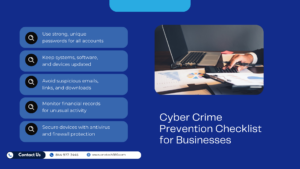
By educating employees, strengthening passwords, keeping systems updated, monitoring financial activity, and building a security-first culture, organizations can significantly reduce their risk. Prevention does not require perfection, only consistency and awareness.
Protecting your systems, data, and people today helps ensure your organization remains resilient tomorrow.
If you implement these cyber crime prevention tips consistently, you’ll lower your risk and respond faster when threats show up.
Have questions about protecting your business? You can get in touch with our team through the Contact Us page.